
Does Ceramic Tint Really Cut Cabin Heat?
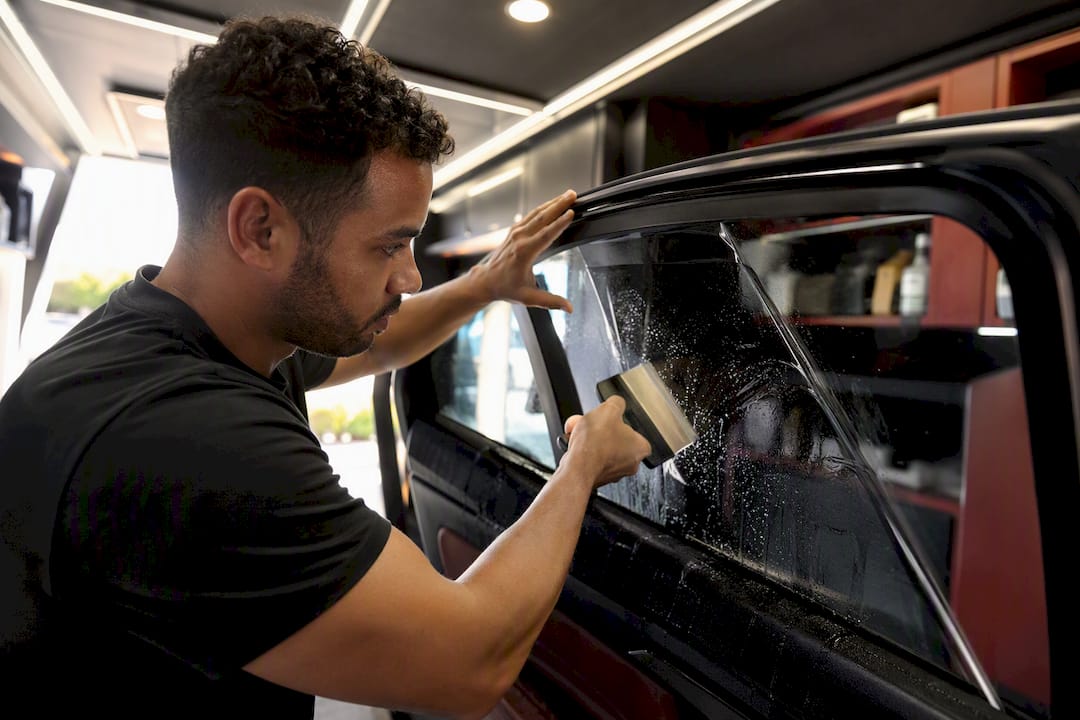
Yes. Quality nano-ceramic automotive tint measurably reduces the heat you feel inside a parked or driven car by blocking infrared energy and cutting total solar energy transmitted through the glass. Two key metrics to consider are Total Solar Energy Rejection (TSER), which indicates the overall portion of solar energy blocked, and infrared (IR) rejection, which measures how much heat-carrying infrared light is stopped before it reaches your dash and seats. Here’s what those figures actually mean for your car:
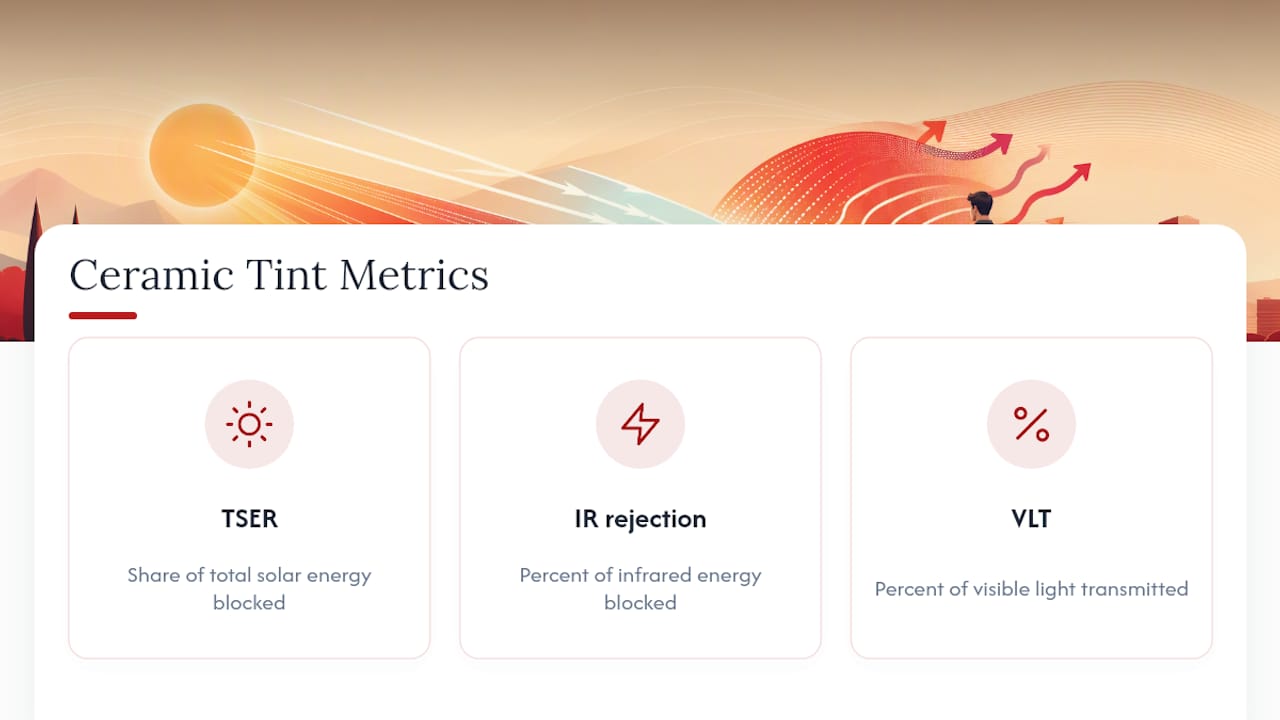
TSER measures total solar energy blocked, including heat, light, and UV combined.
IR rejection measures how much infrared heat energy specifically gets blocked.
Together, they predict comfort better than darkness (VLT) alone.
We install nano-ceramic film on vehicles across the Phoenix metro every week, and the difference in dash temperature is something customers notice within their first drive.
Key Takeaways
Ceramic tint reduces cabin heat by blocking infrared energy through non-metallic nano-particles, with TSER and IR rejection, not darkness, determining real-world performance.
Point | Details |
TSER matters most | Prioritize Total Solar Energy Rejection over VLT darkness when comparing films. |
Watch IR rejection claims | Ask which wavelength range a quoted IR percentage actually covers. |
Ceramic beats dyed on heat | Testing shows ceramic can cut interior temperatures far more than dyed film at equal VLT. |
Longevity adds value | Ceramic resists fading and often carries longer warranties than dyed film. |
Legal limits vary by state | Confirm your state’s VLT minimums before choosing a darkness level. |
Book a proven installer | Phenomenalautocare provides mobile nano-ceramic tint installs matched to TSER targets and Arizona’s climate demands. |
Table of Contents
What Is Ceramic Tint Heat Reduction and How Does It Work?
Ceramic window film gets its name from the nano-ceramic particles suspended in the film layer instead of dye or metal flakes. Those particles are non-metallic, non-conductive, and small enough to stay optically clear while still absorbing and scattering infrared energy before it converts to heat inside your cabin.
Three metrics describe what that film actually does. TSER is the percentage of total solar energy, visible light, infrared, and ultraviolet combined, that never makes it through the glass. IR rejection isolates just the infrared band, the part of sunlight your skin reads as heat rather than brightness. VLT (visible light transmittance) measures how much visible light passes through, which is what determines how dark the tint looks and whether it meets your state’s legal limit.
Because ceramic particles don’t conduct electricity the way metallic tint does, ceramic film won’t interfere with your phone signal, GPS, or toll transponder. That’s a real practical advantage over older metallic films. Ceramic tint also blocks close to 99% of UV rays, according to 3M’s Ceramic IR Series documentation, a benefit distinct from heat rejection but one that matters just as much for your dashboard and upholstery.
One caveat worth knowing before you shop: IR rejection numbers can be wavelength-dependent. That’s why serious buyers lean on TSER as the more reliable comparison point.
Pro Tip: Ask any installer for the TSER percentage first, then the IR rejection range. If they can only quote darkness level, ask again, or ask a different shop.
How Much Cooler Does a Car Get With Ceramic Tint?
Manufacturer data gives you a real benchmark. 3M lists up to 66% TSER and up to 95% IR rejection for its Ceramic IR Series, while Ceramic Pro’s Kavaca IR line publishes selective IR rejection and TSER figures that vary by tint level, meaning even lighter, more transparent films can still block a meaningful share of heat.
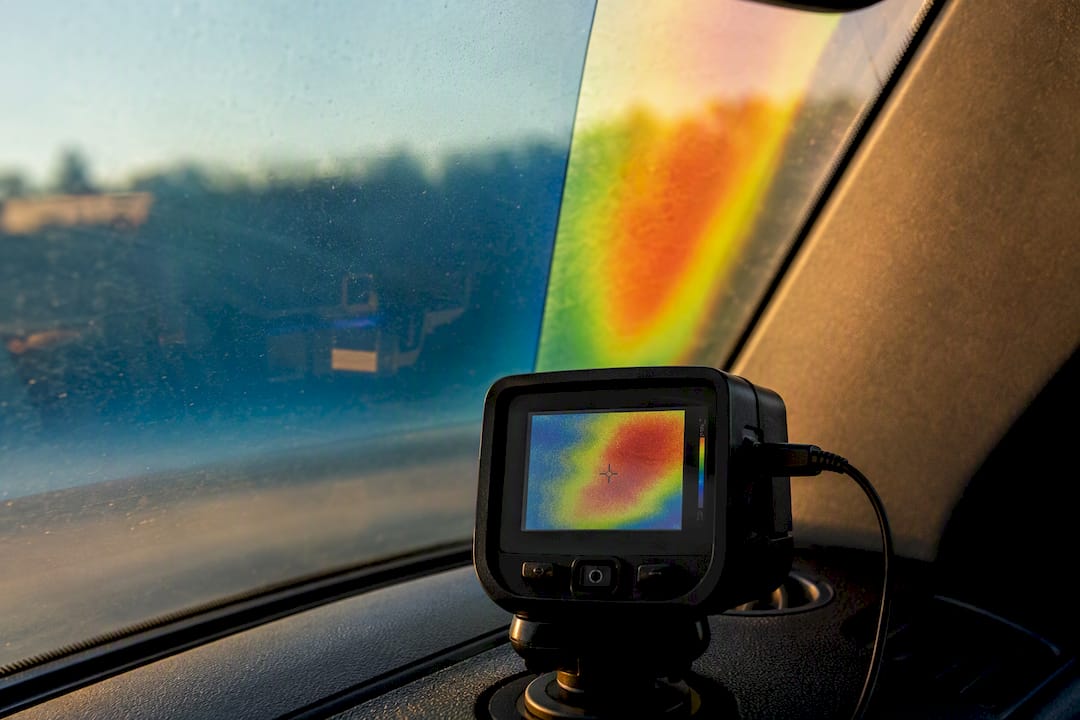
Independent comparative testing summarized by TrueLine Automotive found ceramic film cutting interior temperatures by roughly 27°F in some side-by-side tests, compared to about 10°F for dyed film at the same darkness level. That’s not a marginal edge. It’s the difference between a steering wheel you can grip immediately and one that needs a minute to cool.
Real-world results still swing based on a handful of variables:
VLT chosen — lighter film with strong TSER can outperform darker film with weak specs.
Glass type — laminated windshields already block some IR before tint gets involved.
Parking conditions — full sun versus partial shade changes everything.
Vehicle color and interior material — dark leather absorbs and holds heat longer than cloth.
Install quality — bubbling or poor edge sealing lets heat sneak past the film’s actual rating.
One thing to expect: your car won’t feel instantly cold the moment tint goes on. Interior materials store heat as thermal mass, and that heat radiates back into the cabin for a while even after the sun’s direct energy is blocked. Ceramic tint slows the rate heat builds up and how much your AC has to fight, but it isn’t a substitute for letting a scorched dashboard release its own stored warmth.
Ceramic vs. Dyed vs. Metallic: Which Blocks the Most Heat?
Not all window film fights heat the same way, and the mechanism behind each type explains the performance gap.
Dyed film absorbs solar energy rather than reflecting or scattering it. That absorbed energy still converts to heat, some of which radiates into the cabin anyway, which is why dyed film consistently underperforms on IR rejection even at very dark VLT levels.
Metallic film reflects a good share of solar energy using tiny metal particles, giving it decent heat performance. The tradeoff is signal interference. Metallic film can degrade radio reception, GPS accuracy, and cell signal, a real drawback for anyone relying on hands-free calling or navigation.
Ceramic film uses non-metallic nano-particles that block and scatter infrared energy without absorbing it into heat or interfering with electronics. At matched darkness levels, TintGrade’s comparison shows ceramic consistently posting higher TSER and IR rejection numbers than either dyed or metallic alternatives.
Ceramic also holds up better over time. Dyed film is prone to fading and turning purple within a few years under intense sun, while ceramic resists UV degradation and keeps its clarity far longer. That durability difference is where the higher upfront ceramic tint cost starts to make financial sense. You’re not just buying better heat blocking on day one. You’re buying a product that still performs at year five.
What Warranty and Lifespan Should You Expect From Ceramic Tint?
Manufacturer-backed ceramic film commonly carries lifetime warranties against fading, bubbling, and delamination, while dyed film warranties tend to run shorter and cover less. That gap exists because ceramic’s UV resistance and heat stability keep the film’s chemical structure intact far longer.
Lower peak interior temperatures do more than keep you comfortable. They slow the breakdown of dashboard plastics, leather, and upholstery stitching, since heat and UV exposure are the two biggest drivers of interior aging in a parked car.
Before you sign off on any installer’s warranty, check a few things:
Confirm whether “lifetime” means lifetime of the vehicle or lifetime of the original owner, since those terms aren’t interchangeable.
Ask if the warranty covers labor for removal and reinstallation, not just the film material itself.
Check whether the warranty transfers if you sell the car, which can matter for resale value.
What Should You Ask Before Buying Ceramic Tint?
A little skepticism protects you from paying ceramic prices for something that isn’t ceramic at all. Some shops label upgraded dyed or carbon film as “ceramic” purely for the upsell, so come prepared with the right questions.
What’s the TSER rating? A real ceramic product will have a documented number, not a vague “blocks a lot of heat” answer.
What’s the IR rejection range, and across which wavelengths? This flags whether the number is cherry-picked from a narrow band.
What VLT options are available? You want a range, not a single dark option pushed regardless of your goals.
Is this film confirmed metal-free? Ask directly, since metallic and ceramic can look similar once installed.
What does the warranty actually cover, and for how long?
Can I see a demo sample in daylight? Feeling the heat difference with your hand against two samples tells you more than any brochure.
Red flags include an installer who can’t produce performance numbers, pushes the darkest film “because it looks better,” or gets cagey when you ask for the manufacturer name. Installation quality matters just as much as the film itself: proper edge sealing, clean prep work, and adequate curing time all affect how well the tint performs long term.
Pro Tip: A shop confident in its product will hand you spec sheets without hesitation. Hesitation is the biggest red flag in this entire buying process.
Who’s Behind This Guide
Phenomenalautocare installs mobile nano-ceramic window tint across the Phoenix metro alongside ceramic coatings and full detailing services, backed by a 5-star rating from over 250 customers and multiple community service awards. In practice, we match TSER targets to the problem, prioritizing higher-TSER film for Arizona’s leather interiors and dashboard-heavy exposure over simply chasing the darkest legal VLT.
How Does Installation Affect Ceramic Tint’s Heat Performance?
Even the best film underperforms if it’s installed poorly. Professional installation starts with a full glass cleaning to strip away old adhesive, dust, and residue, since any trapped debris creates visible bubbles and weak points where heat can bypass the film’s coating.
Precision cutting matters more than most owners realize. Film cut too small leaves gaps at the edges where UV and IR sneak past uncovered glass, undercutting your TSER rating before the film even gets a chance to work. Cut too large, and the film curls or lifts at the edges within months, shortening its effective lifespan and leaving another opening for wasted heat.
Curing time is the step most often rushed. Ceramic film needs anywhere from a few days to two weeks to fully bond and haze-out, depending on humidity and temperature. Rolling windows down too early or pressure-washing the glass during that window can shift the film and create a bubble line that never fully disappears. Arizona’s summer sun actually shortens realistic curing timelines, but reputable installers still tell you when your car is safe to wash and when it’s not.
Cost differences between shops often trace back to prep time and material handling, not just the film brand. A $50 discount rarely accounts for the extra hour of glass prep that separates a five-year install from one that needs redoing within eighteen months. Nano-ceramic tint applied correctly protects your investment in the film itself, not just your dashboard.
What VLT Levels Are Legal for Ceramic Tint by Region?
Every state sets its own legal minimum for VLT, and those percentages apply regardless of whether you choose ceramic, dyed, or metallic film. VLT laws typically vary by window: front windshield, front side windows, rear side windows, and rear windshield often carry different minimums, with front windows usually held to stricter limits than rear ones.
Because these rules are set at the state level and change periodically, the only reliable way to confirm your legal limit is checking your state’s department of motor vehicles or transportation authority directly before your install. A reputable installer will already know your local limits and should walk you through your legal options rather than letting you pick a VLT that risks a citation.
Ceramic film’s advantage here is real: because it delivers strong heat rejection even at lighter VLT percentages, you don’t have to choose between staying street-legal and staying cool. A high-TSER ceramic film at a legal 35% VLT can outperform a heavily tinted dyed film that skirts the law, giving you both compliance and comfort instead of forcing a tradeoff between them.
Installer Perspective: What Ceramic Tint Actually Delivers
Ceramic tint reduces long-term heat buildup and eliminates hot spots on the dash and steering wheel, but it won’t make a car parked in July sun feel instantly cold the moment you open the door. Chase the metrics, not the darkness. The clearest wins show up in hot climates, leather interiors, and cars that sit outside all day.
— Phenomenal
Ready for a Cooler, Better-Protected Cabin?
If you’ve made it this far, you already know darkness alone doesn’t win the heat fight, TSER and IR rejection do. Phenomenalautocare’s mobile nano-ceramic tint service brings that metric-first approach straight to your driveway or office parking lot: a consultation to match TSER targets to your car and climate exposure, VLT selection that keeps you street-legal, and workmanship backed by a warranty so you’re not gambling on a rushed install.
We handle the full process on-site, from glass prep to edge sealing to curing guidance, so you’re not left guessing when it’s safe to roll your windows down. Explore the ceramic window tint service or check availability through our Phoenix-area mobile detailing page if you’d rather bundle tint with a full detail. Ready to book? Start at Phenomenalautocare and get a quote for your vehicle this week.
Sources
Recommended
Comments