
Don't Coat Over Swirls: Tesla Ceramic Coating Needs Pro Prep
Updated: 11 hours ago
Thinking about ceramic coating for your car?
Yes, for most Tesla owners, ceramic coating is worth the investment, but only if you understand what it actually protects against. It boosts hydrophobicity, shields the clear coat from UV breakdown, and keeps that factory shine looking sharp for years. What it will not do is stop a rock chip on the highway, so if impact protection is your top priority, Paint Protection Film deserves a place in your plan too.
TL;DR:
Ceramic coating on a Tesla mainly enhances water repellency, UV resistance, and gloss but does not protect against physical damage like rock chips or dings.
Proper prep, including decontamination and paint correction, is crucial; applying over damaged or swirled paint will lock in imperfections.
Coatings last typically between 2 and 5 years, with climate, mileage, and maintenance significantly affecting longevity.
Layering coating over paint or PPF improves hydrophobicity and ease of cleaning, but impact protection requires physical barriers like paint protection film.
Professional application with correction offers better long-term performance and warranty security compared to DIY kits, especially on cars with existing paint flaws.
Table of Contents
What Tesla Ceramic Coating Actually Does to Your Paint
Ceramic coating is a liquid nano-polymer that cures into a semi-permanent layer chemically bonded to your car’s clear coat. Unlike wax or paint sealant, which sit on the surface and wear off within weeks, a properly applied coating forms a cross-linked bond that becomes part of the clear coat’s outer surface. That’s the difference between a sacrificial layer and a structural one.
This distinction matters more on a Tesla than on most other vehicles. Tesla’s factory clear coat has a reputation among detailers for being thinner and softer than what you’ll find on many legacy automakers, which means it marks, swirls, and etches more easily from everyday contact, bird droppings, and improper washing. A soft clear coat isn’t a defect. It’s simply a material choice that puts more pressure on how the car gets prepped and maintained.
Once a coating is bonded correctly, the practical effects show up fast:
Hydrophobicity: Water beads and sheets off instead of clinging to the surface, which means fewer water spots and less dirt adhesion between washes.
UV resistance: The coating absorbs and disperses ultraviolet exposure that would otherwise oxidize and fade the clear coat over time.
Gloss depth: A correctly prepped, coated Tesla often looks noticeably wetter and deeper in color than an uncoated one, even under the same lighting.
Chemical resistance: Bug splatter, tree sap, and road grime become easier to remove because they can’t bite into the clear coat the way they can on bare paint.
None of this happens automatically just because a bottle says “ceramic” on the label. The bond quality depends entirely on what the clear coat looks like underneath, which is why the prep stage carries more weight than the coating itself. Applied correctly and cured properly, coating does not affect Tesla’s factory warranty, and it’s compatible with PPF if you decide to layer both.
Is Ceramic Coating Worth It for a Tesla Owner?
The honest answer depends on how you use the car and what you’re trying to protect. Coating earns its cost back mostly in time saved and in how the paint ages, not in accident-level protection.
The real benefits:
Washing gets faster and easier because contaminants release instead of bonding to the surface.
Gloss and color depth hold up longer against sun exposure, especially relevant in a hot, high-UV climate.
Bug splatter, sap, and hard water spots wipe away instead of etching into the clear coat.
Resale presentation improves. A Tesla that still looks glossy at 40,000 miles photographs and sells better than one with dull, swirled paint.
The real limits:
Coating will not stop rock chips, door dings, or deep scratches. It’s a chemical shield, not a physical one.
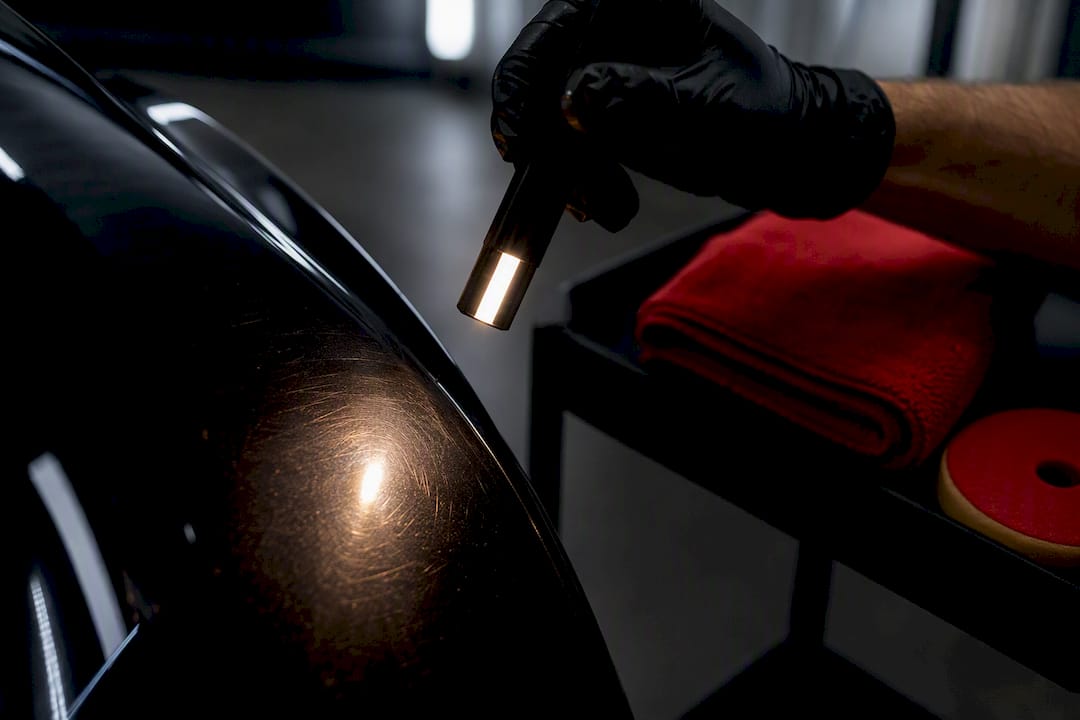
A coating locks in whatever is already on the paint. Swirl marks, light scratches, or water spots present before application will still be visible underneath a glossy layer.
The upfront cost and appointment time is real, and skipping proper prep to save money undercuts the entire investment.
Pro Tip: If your Tesla already has visible swirl marks or hazing from an automatic car wash, get a paint correction consultation before you even ask about coating pricing. Coating over damaged paint just makes the damage glossier, not better.
Storage matters too. A Tesla that lives in a garage and drives 8,000 miles a year gets far more mileage out of a coating than one parked outside year round and driven daily through gravel roads or coastal salt air.
How Long Does Ceramic Coating Actually Last?
Most ceramic coatings last 2 to 5 years, with some premium professional-grade systems pushing toward 7 to 8 years under ideal, low-exposure conditions. That range is wide for a reason. Lifespan depends far more on how the car is used and maintained than on the marketing claims printed on the bottle.
Several factors chip away at that lifespan faster than owners expect:
UV exposure: Constant sun accelerates breakdown of the coating’s polymer structure, especially in hot Southwest climates.
Road salt and de-icing chemicals: These are corrosive to coating layers in colder regions and shorten effective protection.
Mileage and daily use: Highway driving throws more debris and contaminants at the paint than short, low-speed trips.
Wash technique: Automatic tunnel washes with abrasive brushes degrade a coating far faster than gentle handwashing.
Neglect: A coating that never gets topped off or inspected will underperform its rated lifespan regardless of quality.
Real-world results rarely match the number on the label once a car sees genuine daily exposure to sun, road salt, and heavy mileage. That’s not a knock on the product. It’s just physics.
A maintenance routine keeps a coating performing near its potential:
Hand wash every 1 to 2 weeks using the two-bucket method and a pH-neutral, ceramic-safe soap.
Skip pressure washers held too close to the surface. High-PSI water at close range can wear down coating faster than normal contamination.
Apply a ceramic-safe topper spray every few months to refresh hydrophobic performance between full washes.
Watch for fading beading behavior. When water stops sheeting cleanly and starts sitting flat on the hood, that’s your sign the coating is wearing thin.
Getting the Paint Ready Before Coating Goes On
Skilled installers understand a coating amplifies whatever sits underneath it. Apply ceramic coating over swirled, contaminated paint, and you get a glossy version of those same swirls, permanently locked in for years. That’s the single biggest reason professional prep changes the outcome so dramatically.
A proper professional workflow looks like this:
Two-bucket hand wash to remove loose dirt without grinding grit into the clear coat.
Iron and fallout removal using a chemical decontaminant that dissolves embedded brake dust and metal particles a wash alone can’t touch.
Clay bar decontamination to strip bonded contaminants like tree sap and overspray that sit on top of the clear coat.
Paint correction or polish to remove existing swirl marks, light scratches, and oxidation before anything gets sealed in.
Surface prep wipe-down with isopropyl alcohol or a dedicated prep spray to strip any oils or polish residue that would block the coating from bonding.
That decontamination and correction sequence is exactly what reputable Tesla-focused installers describe as the difference between a coating that performs and one that fails early. It’s also where a proper claybar and polishing routine earns its place in the process rather than being treated as an optional add-on.
Application itself is a technical skill, not a pour-and-wipe job. Experienced installers work in small panels, roughly 2 feet by 2 feet at a time, applying the coating with a suede applicator in a cross-hatch pattern to ensure even coverage. Each panel gets a set number of drops based on the product’s specifications, and timing matters: too little flash time before buffing leaves streaks, too much leaves permanent high spots that never level out. Excess product gets buffed off with a clean microfiber before it fully sets.
Curing takes roughly 24 hours before the vehicle is safe to drive normally, though full cure can take several days. Most installers recommend keeping the car sheltered and away from washing during that initial window so the bond isn’t disrupted while it’s still setting.
The gap between a rushed DIY application and a properly corrected, professionally installed coating usually isn’t visible on day one. It shows up six months later, when one car still beads water cleanly and the other one doesn’t.
DIY Ceramic Coating Kit or Professional Install: What’s the Real Trade-Off?
Cost is where most owners start this decision, and the spread is wide. A DIY kit typically runs around $225, while professional mid-tier packages range from $1,000 to $2,000, and premium installs with extensive correction and multi-year warranties can reach $1,500 to $3,500 or more.
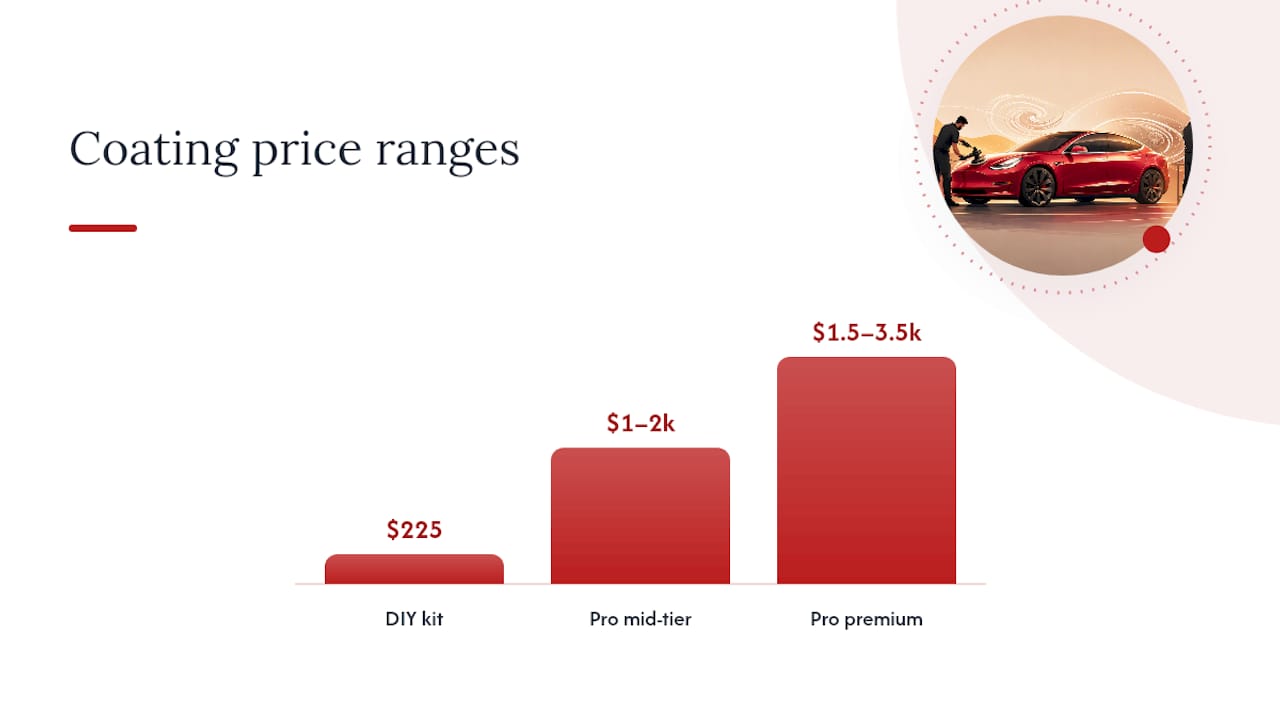
That gap isn’t just markup. Professional pricing reflects paint correction time, multi-stage decontamination, and warranty backing that a DIY kit simply doesn’t include.
What you’re really paying for with a professional install:
Decontamination and correction steps most owners don’t have the tools or experience to do properly at home.
Application technique that avoids high spots, streaking, and uneven cure.
A warranty or service guarantee tied to the installer’s own work, not just a product’s label claim.
Where DIY kits make sense:
Some newer graphene-based DIY products, like T Sportline’s TMaxx kit marketed for Tesla surfaces and claiming up to 5 years of protection, give confident DIYers a reasonable entry point.
If your paint is already in excellent condition with no swirls or contamination, the prep burden drops significantly.
Budget constraints and a genuine willingness to learn proper technique make DIY a defensible choice for patient owners.
The real risk of going DIY: uneven application creates high spots that are extremely difficult to remove without a full re-correction, and there’s no simple undo button once the product cures. A rushed panel or an inconsistent cross-hatch pattern doesn’t ruin the car, but it does mean redoing work that a professional would have gotten right the first time.
Ceramic Coating vs. PPF: Which One Actually Protects Against What
These two products solve different problems, and confusing them is the most common mistake Tesla owners make when researching protection options. Ceramic coating and PPF are not competing products: they’re complementary, and most owners who want complete protection end up using both.
Paint Protection Film is a physical barrier. It’s a thick, clear urethane film applied to specific panels, and it absorbs the physical impact of rock chips, road debris, and minor abrasions. Ceramic coating is a chemical barrier. It doesn’t stop an impact, but it makes the surface resistant to UV damage, chemical staining, and water spotting, while adding the gloss and hydrophobic behavior owners actually notice day to day.
A common and sensible strategy for Tesla owners:
PPF on high-impact zones: front bumper, hood, mirrors, and rocker panels, where rock chips and road debris hit hardest.
Ceramic coating on the rest of the vehicle: roof, doors, trunk, and remaining body panels, where UV exposure and washing wear matter more than impact risk.
Coating applied over PPF too: this adds hydrophobicity and easier cleaning to the film itself, and most installers recommend it as standard practice rather than an upsell.
If you drive mostly highway miles or live somewhere with loose gravel roads, weighting your budget toward PPF on the front end makes sense. If your Tesla mostly sees garage storage and city driving, full-vehicle ceramic coating alone may cover your actual risk profile.
What a Professional Tesla Coating Appointment Looks Like
A trustworthy mobile detailer treats ceramic coating as the last step in a sequence, not a standalone service. The realistic workflow runs: full decontamination wash, paint correction to remove swirls and oxidation, surface prep wipe-down, then coating application in controlled, dust-free conditions, followed by a cure period before the car goes back into daily use.
What separates a solid appointment from a rushed one:
A pre-inspection walk-around that identifies swirls, etching, or trim contamination before any product touches the car.
Correction work that’s explained and shown, not skipped to save time.
A written breakdown of what the coating covers and what maintenance keeps it performing.
A realistic appointment window. Full correction and coating on a Tesla typically isn’t a same-day, one-hour job.
Owners who understand why polishing before coating matters tend to ask better questions before booking, and they end up happier with the result because expectations match reality.
Which Tesla Owners Get the Most Value From Coating?
If you’re a daily commuter putting on real highway miles, prioritize PPF on your front-end panels first; coating alone won’t touch chip risk. If you’re leasing and plan to hand the car back in two or three years, a mid-tier coating package protects resale condition without overspending on a coating rated to outlast your lease. Owners keeping a Tesla long term, five-plus years, get the strongest return from a full correction plus premium coating, since gloss retention and UV resistance compound over time. If your paint already shows swirls or hazing, skip DIY kits entirely and call a professional. If your paint is genuinely flawless and you’re patient with technique, a quality DIY kit is a reasonable bet.
— Phenomenal
Thinking about ceramic coating for your car?
Book a Tesla Ceramic Coating With Phenomenal Auto Care
If everything above told you that prep quality decides the outcome, the fastest way to skip the guesswork is booking someone who does correction and coating together, every time, as one job instead of two separate decisions. Mobile auto care services that come to your driveway or office lot help you avoid losing a day dropping the car off and arranging a ride home.

A typical booking pairs paint correction with a full ceramic coating package, so swirls and contamination get addressed before the coating ever touches the surface, not after you’ve already paid for a bottle that can’t fix what’s underneath it. Arizona owners in the Phoenix, Mesa, Chandler, or Gilbert areas can check local ceramic coating availability in Mesa or start with a general quote at Phenomenalautocare to get an appointment window that fits your schedule.
Thinking about ceramic coating for your car?
Sources
FAQ
Does Ceramic Coating Protect Against Rock Chips?
No. Ceramic coating is a chemical barrier that resists UV damage and staining, but it has no impact absorption. PPF is the product designed specifically to prevent rock chips and abrasions.
How Long Does Tesla Ceramic Coating Last?
Most coatings last 2 to 5 years, with premium professional systems reaching up to 7 to 8 years under ideal, low-exposure conditions. Climate, mileage, and wash habits shift that range significantly.
Can I Apply Ceramic Coating Over PPF?
Yes. Coating over PPF adds hydrophobicity and easier cleaning to the film, and most installers treat this as standard practice for owners who want both chip protection and full-vehicle gloss.
Does Ceramic Coating Void a Tesla’s Warranty?
No, correctly applied ceramic coating does not affect Tesla’s factory warranty, and it’s compatible with PPF and other factory paint protection options.
Is Professional Ceramic Coating Worth the Cost Over a DIY Kit?
For most owners, yes, because professional packages include paint correction and decontamination that determine whether the coating actually performs. Phenomenal Auto Care builds correction into its ceramic coating packages rather than treating it as a separate upsell.
Recommended
Comments